Amla Capsules Versus Liquid Extracts Compared

Amla capsules versus liquid extracts is not simply a question of convenience. The format can affect what else is present in the formula, how reliably it delivers a measured serving, how it fits a daily routine, and whether the product reflects a whole-food or extract-only approach. For informed consumers and practitioners, the label behind the format matters at least as much as the format itself.
Amla, also known as Indian gooseberry or Phyllanthus emblica, has a long history of use in traditional botanical systems. Its fruit contains a complex matrix of naturally occurring compounds, including polyphenols, tannins, organic acids, and vitamin C. Modern supplements may use whole-fruit powder, concentrated extracts, or a combination of both. Those distinctions should guide the comparison.
Amla Capsules Versus Liquid Extracts: The Core Difference
A capsule is a delivery format. It may contain whole-fruit amla powder, a standardized extract, or both. A liquid extract is also a delivery format, typically made by extracting amla constituents into a liquid base such as water, glycerin, or alcohol. Neither format is automatically superior without knowing the starting material, extraction process, concentration, and serving size.
The most meaningful difference is often formulation control. Capsules generally provide a defined amount of dry material per serving and can protect ingredients from moisture and flavor-related barriers. Liquid products offer flexible serving adjustments and may appeal to people who do not want to swallow capsules, but their concentration and ingredient profile can vary widely.
A well-made capsule can also accommodate a broader whole-food strategy. For example, a formula combining organic whole-fruit amla with a 30:1 extract can provide both the native fruit matrix and concentrated botanical material in a practical serving size. That is a materially different approach from a capsule containing only an isolated extract or a liquid tincture made with an unspecified extraction ratio.
What “Extract” Actually Tells You
The word extract can sound inherently more potent, but it does not answer every quality question. An extract is produced by concentrating selected soluble or extractable components from the raw botanical. The resulting powder or liquid may deliver more extract-derived material by weight than plain fruit powder, yet the final profile depends on the extraction method and what the manufacturer chooses to preserve or standardize.
A 30:1 extract, for example, indicates that 30 parts of starting botanical material were used to produce one part extract, subject to the manufacturer’s stated method. It does not mean the finished product is 30 times better, nor does it establish an equivalent amount of any particular active constituent unless that constituent is measured and disclosed.
For this reason, concentration ratios should be viewed as one formulation detail, not a standalone quality claim. Ask whether the label identifies the plant part used, whether the extract is paired with whole fruit, and whether the manufacturer provides research and testing information that helps clarify the product’s composition.
When Capsules Are the Better Fit
Capsules are often the most straightforward choice for people who value consistency. Each serving is premeasured, portable, and usually easy to integrate with meals or an existing supplement routine. This is especially useful for practitioners recommending a defined protocol to clients who need clear instructions and repeatable intake.
The dry format also has practical advantages. Amla has a distinctly tart, astringent taste that many people do not enjoy on its own. Capsules avoid that sensory hurdle without requiring sweeteners, flavor systems, or a liquid carrier. For frequent travelers or anyone keeping supplements at work, capsules are generally less cumbersome and less prone to spills.
From a formulation perspective, capsules are particularly useful when the goal is to combine multiple dry botanical forms. A whole-fruit + 30:1 extract formula can be designed to retain the food-derived character of amla while adding concentrated extract material. That dual-format approach recognizes a basic reality of botanical nutrition: the native plant matrix and an extract are not interchangeable.
Capsules do have limits. They may be difficult for people with swallowing challenges, and a fixed serving is less flexible for someone who prefers to make small adjustments under guidance from a qualified healthcare professional. Capsule size can also constrain how much bulk whole-fruit powder fits into a serving.
When Liquid Extracts May Make Sense
Liquid extracts can be practical for people who strongly prefer liquids, have difficulty swallowing capsules, or want to adjust a serving in smaller increments. They can be taken directly or mixed into a small amount of water, though the flavor of amla should be expected to come through.
The trade-off is that liquid labels require closer scrutiny. A teaspoon or dropperful does not reveal much unless the product states the amount of amla material delivered, the extraction ratio, and the other ingredients in the bottle. Some liquids rely on glycerin, alcohol, water, preservatives, flavorings, or sweeteners. These are not necessarily inappropriate, but they should be visible and aligned with the buyer’s preferences.
Stability deserves attention as well. Liquid products are exposed to repeated opening, and their quality can be affected by storage conditions. Follow the label’s storage instructions, note the expiration date, and use only the provided measuring device. A dropper is convenient, but it is not automatically a precise measurement tool unless the serving volume is clearly defined.
For practitioners, liquid extracts can be helpful when client adherence improves with a non-capsule format. Still, a liquid should be selected based on transparent chemistry and manufacturing standards, not on the assumption that liquid delivery is inherently faster or more bioavailable. Bioavailability depends on the specific compounds, food intake, dose, and individual physiology. Broad claims cannot be made from format alone.
Whole Fruit, Extract, or Both?
This is the question that often carries more weight than capsules versus liquids. Whole-fruit amla powder offers the botanical in a less concentrated, more food-like form. It includes the naturally occurring matrix of the dried fruit, although processing and storage still influence the finished material.
An extract offers concentration. It may be useful where a meaningful amount of extract-derived compounds is desired without requiring a large serving of powder. But concentrating a botanical can shift its balance. Depending on the process, some compounds may be emphasized while others are reduced or absent.
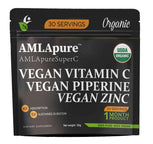
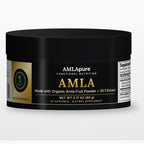
A combined formula is designed to address that trade-off. By pairing organic whole-fruit amla with a 30:1 extract, AMLApure applies a whole-food formulation perspective without treating the whole fruit and extract as identical ingredients. It is an approach for buyers who want both the foundational character of the fruit and the practical concentration an extract can provide.
How to Read an Amla Supplement Label
An informed purchase starts with the Supplement Facts panel and the ingredient statement. Identify whether the product contains fruit powder, extract, or both. Then look for the plant’s scientific name, the part used, the amount per serving, and any disclosed extraction ratio or standardization details.
Quality signals should be specific. USDA Organic certification addresses agricultural and handling standards for certified ingredients. cGMP-certified manufacturing indicates production under current Good Manufacturing Practice requirements designed to support process control and quality systems. Neither phrase replaces a complete label, but both are more meaningful when accompanied by transparent formulation details.
Also examine the non-active ingredients. Capsule materials, flow agents, carriers, flavorings, sweeteners, and preservatives may be relevant depending on your dietary needs and formulation standards. A short ingredient list is not automatically better, but every ingredient should have a clear purpose.
Finally, avoid comparing products by capsule count, bottle size, or extract ratio alone. Compare the actual amount and type of amla delivered per serving, the source and certification of the raw material, and the manufacturer’s willingness to explain its research and testing practices.
Safety and Practical Use
Amla supplements are not a substitute for a varied diet or medical care. If you are pregnant or nursing, managing a medical condition, preparing for surgery, or taking prescription medications, consult a qualified healthcare professional before using a new botanical supplement. This is particularly relevant for anyone using medications that affect blood sugar or blood clotting.
Use the product as directed, and introduce one new supplement at a time when possible. That makes it easier to assess individual tolerance and to maintain a clear record of what is being used. Practitioners should consider the client’s medication profile, dietary pattern, and adherence preferences alongside the label details.
The right choice is the format you can use consistently and evaluate confidently. Choose a liquid when flexibility or swallowing comfort is the priority. Choose capsules when precise serving size, portability, and a whole-fruit + concentrated-extract formulation are the better match. In either case, let transparent sourcing, organic standards, and the actual amla formula make the decision more than the delivery format alone.


 Contact us