Third Party Testing Review: What Results Prove

A certificate of analysis can look reassuring at first glance: a laboratory name, a few passing results, perhaps a batch number. But a meaningful third party testing review asks harder questions. Was the finished product tested, or only a raw ingredient? Do the methods match the ingredient and risk being assessed? Are the reported results specific enough to verify identity, potency, and purity? For organic botanical and enzyme nutrition, those distinctions matter.
Testing is a critical part of supplement quality, but it is not a universal stamp of excellence. It is one layer in a larger quality system that includes authenticated sourcing, thoughtful formulation, cGMP-certified manufacturing, traceable documentation, and appropriate storage. Understanding what third-party results can prove - and what they cannot - helps consumers and practitioners assess products with greater precision.
What a Third Party Testing Review Should Examine
Third-party testing means analysis is performed by an independent laboratory rather than solely by the ingredient supplier or brand. Independence can reduce conflicts of interest, particularly when the laboratory has established methods, documented quality procedures, and clear reporting practices. Yet the phrase alone does not tell you what was tested or how comprehensively it was evaluated.
A useful review begins with the test scope. A botanical powder may be tested for microbial quality and heavy metals, while a finished capsule may also require confirmation that the stated amount of the active ingredient is present through the end of its shelf life. An enzyme product has another consideration: its activity must be measured in relevant activity units, not simply by capsule weight.
For a whole-food botanical formula, testing should support the actual label claim. If a product contains both whole-fruit amla and a 30:1 amla extract, a quality review should distinguish the ingredients rather than treating the blend as an undifferentiated plant powder. Whole-fruit material contributes its natural food matrix. A concentrated extract is used to provide a more targeted level of characteristic botanical compounds. Those are different formulation roles, and the quality documentation should be capable of supporting them.
Identity: Is the Ingredient What the Label Says?
Botanical identity is the first question, not an afterthought. Common names can be inconsistent, and plant materials may vary by species, plant part, harvest region, processing method, and extraction ratio. A credible identity program begins before finished-product testing, with supplier qualification and specifications for the correct botanical material.
Laboratories may use microscopy, chromatographic fingerprinting, DNA-based approaches, or other validated methods depending on the ingredient. No single method is automatically best in every case. DNA testing, for example, can be useful for raw botanicals but may be less suitable once an ingredient has been highly extracted or processed. Chromatographic methods can help characterize compounds in an extract, but they do not replace sound botanical sourcing.
For buyers, the practical question is whether the brand can clearly identify the botanical, the form used, and the formulation purpose. Vague labels and vague testing claims tend to travel together.
Potency: Does the Formula Deliver Its Declared Amount?
Potency testing verifies whether a product meets its stated specification. What that means depends on the ingredient. For vitamins and minerals, the target may be a defined quantity in milligrams or micrograms. For botanical extracts, it may include the extract ratio, a specified marker compound, or another meaningful standard. For nattokinase, enzyme activity is central, because milligram weight alone does not describe functional activity.
A passing potency result should also be interpreted in context. A marker compound is not the entire botanical. It can be useful for standardizing an extract, but it does not establish that a product offers every constituent or property associated with the whole plant. This is one reason food-first formulations deserve careful explanation. Whole-fruit ingredients and standardized extracts can complement each other, provided the label accurately represents both.
Potency is also time-sensitive. Ingredients can change during storage, especially when exposed to heat, moisture, oxygen, or light. A credible quality program uses stability considerations to establish an expiration date and appropriate packaging. Testing a fresh production batch is valuable; ensuring the product remains within specification through its labeled shelf life is more demanding.
The Contaminant Results That Matter Most
A thoughtful third party testing review evaluates risk according to the ingredient, origin, and format. Organic certification is meaningful because it addresses agricultural and handling standards, but it does not eliminate the need for contaminant testing. Natural materials are still grown in soil, processed in facilities, and transported through complex supply chains.
The most relevant testing categories commonly include:
- Heavy metals, such as lead, arsenic, cadmium, and mercury, which can be associated with environmental exposure and require limits appropriate to the product’s intended use.
- Microbiological quality, including tests for pathogens and indicators of sanitation or spoilage risk, especially important for plant-based powders and food-derived ingredients.
- Pesticide residues, which remain relevant when evaluating agricultural materials, including products made with organic ingredients.
- Residual solvents, when an extraction process uses solvents that require verification of removal or control.
- Mycotoxins and other region-specific contaminants, which may be appropriate for certain crops, growing conditions, or raw-material risks.
Why Finished-Product Testing Has a Different Value
Raw-material testing is necessary, but it does not fully answer questions about the product that reaches the customer. Manufacturing introduces additional variables: blend uniformity, capsule fill weight, potential cross-contact, packaging integrity, and label accuracy. Finished-product testing helps verify that the formula as sold aligns with its specification.
The appropriate frequency depends on the test and the product. Testing every batch for every possible analyte may not be necessary or proportionate in all circumstances. A risk-based program can use qualified suppliers, incoming verification, validated manufacturing controls, and periodic or batch testing where it is most meaningful. What matters is that the program is documented, scientifically justified, and not reduced to a marketing phrase.
cGMP-certified production provides the operational framework behind this work. It establishes controls for records, sanitation, equipment, specifications, complaints, and quality decisions. Third-party laboratory results are stronger when they sit within that system. A clean test result cannot correct a poorly controlled process, just as a well-run facility cannot excuse a formula that fails its specifications.
How to Read a Certificate of Analysis Without Overreading It
A certificate of analysis, often called a COA, is a batch-specific document. Start by checking that the product name, lot number, and date correspond to the product in question. Then look for the tests performed, the acceptance criteria, the reported result, and a clear pass or fail determination.
Be cautious with documents that are generic, undated, or disconnected from a finished-product lot. Also consider whether the panel fits the formula. A COA limited to heavy metals may be useful, but it does not verify botanical identity, enzyme activity, or microbial quality. Conversely, a potency assay does not demonstrate the absence of contaminants.
Method details can add confidence, though they require interpretation. Established analytical methods and accredited laboratory practices are positive indicators. Still, a consumer does not need to become an analytical chemist to ask sensible questions: What was tested? Which lot was tested? What specification was applied? Does this result address the claim that matters to me?
For practitioners, these questions are especially relevant when selecting products for clients with high expectations around ingredient quality, organic sourcing, and formulation transparency. The goal is not to demand a single document as proof of everything. It is to look for a coherent quality story that connects sourcing, manufacturing, testing, and labeling.
Testing Supports Trust, but Formulation Still Matters
Third-party testing can confirm that a product meets defined specifications. It cannot, by itself, determine whether the formulation is appropriate for a person’s goals, whether an ingredient has sufficient research for a proposed use, or whether a supplement is suitable alongside medications and individual health considerations. Those decisions require qualified clinical judgment, especially with enzyme products and for people managing health conditions.
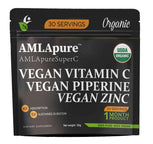
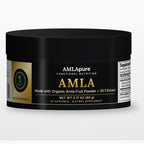
At AMLApure, the quality conversation begins with the ingredients themselves: USDA Organic sourcing, whole-fruit + 30:1 extract formulation where appropriate, and cGMP-certified production supported by research and testing practices. That approach reflects a simple principle: quality is more credible when the formula, the label, and the verification methods tell the same story.
A supplement worth considering should make careful scrutiny easier, not harder. Look for specificity, ask what each test actually demonstrates, and favor products built with the same discipline they ask you to bring to the label.


 Contact us